
De afgelopen maanden hebben we met veel organisaties gesproken die willen beginnen met het meten van real-time ruimtegebruik, maar worstelen met de financiële kant. Hoe krijg ik financiering voor mijn project? Hoe zorg ik ervoor dat ik rendement op mijn investering behaal? Wat kan ik op kleine schaal doen? Gelukkig zijn er oplossingen voor – en een daarvan is kijken naar openingstijden.

Bart Valks

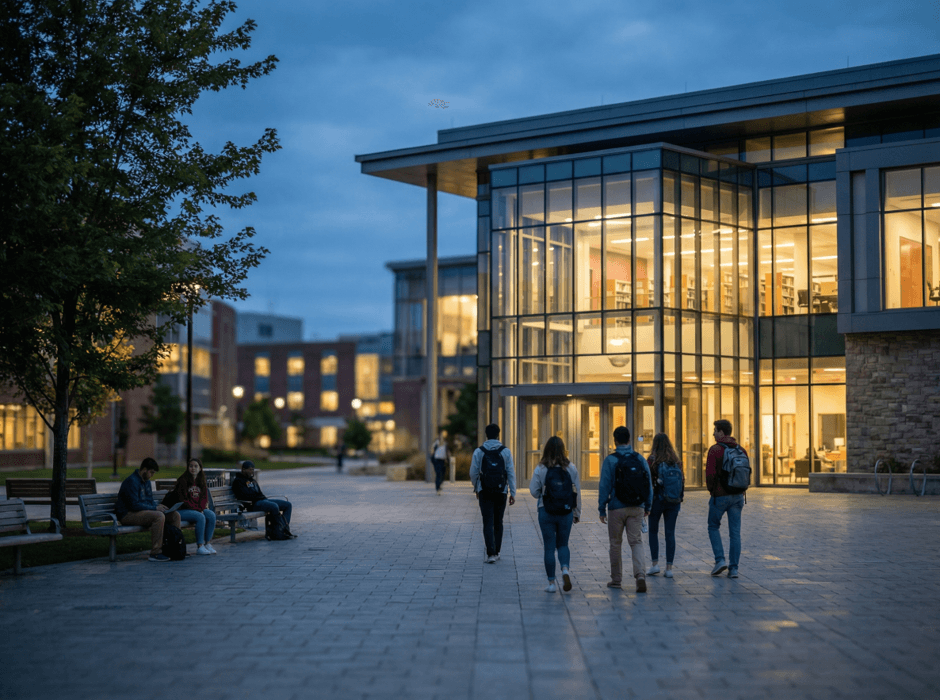
Op weg naar een living campus of een 24/7-campus
Een zeer interessant voorbeeld zijn de openingstijden van gebouwen. Campussen bevatten meestal veel gebouwen, elk met hun eigen openingstijden. En deze openingstijden lopen vaak verder dan de reguliere kantooruren van 9 tot 5. Het is niet ongebruikelijk dat universiteiten veel gebouwen hebben die doordeweeks van 7.00 tot 22.00 uur open zijn, en ook in het weekend! Bovendien kunnen er tijdens tentamenperiodes ook ruimere openingstijden zijn om studeren op de campus te faciliteren.
Op de campus bestaat vaak de neiging om de bestaande openingstijden te handhaven, of deze zelfs te verlengen, in lijn met de trend van een "living campus" of een "24/7 campus". Net als bij reguliere discussies over ruimtegebruik, kan het voor een vastgoedbeheerder lastig zijn om argumenten te geven tegen ruimere openingstijden. Campusgebruikers stellen dat er een noodzaak is: promovendi werken vaak in het weekend in de faculteit en studenten hebben een rustige plek nodig om te studeren. Zoals je wellicht al weet, betwisten we deze behoeften niet; we vragen ons echter af hoeveel ruimte er beschikbaar is en wat er daadwerkelijk gebruikt wordt.
Concentratie van capaciteit om openingstijden te beperken
Zoals u waarschijnlijk al weet, zijn openingstijden een belangrijke kostenpost in het vastgoedbeheer. De beslissing om een gebouw in het weekend te openen, betekent dat er energie nodig is voor verwarming, ventilatie, airconditioning en verlichting; dat er personeel aanwezig moet zijn bij de servicebalie, dat de beveiliging het gebouw moet openen en sluiten en dat het gebouw moet worden schoongemaakt. Het openen van een groot faculteitsgebouw elke zaterdag of zondag kan uw instelling daarom jaarlijks tienduizenden of zelfs honderdduizenden euro's kosten.
Precies hier kunt u volgens ons naar kansen zoeken. Wat als u van 3 gebouwen die elke zaterdag open zijn, zou kunnen overstappen naar slechts één gebouw, wat zou leiden tot aanzienlijke jaarlijkse kostenbesparingen? Zelfs als u een energie-inefficiënt gebouw zou vervangen door een energiezuinig gebouw, zou dat al aanzienlijke kostenbesparingen opleveren. Het enige wat u hoeft te doen, is uw stakeholders de data laten zien om aan te tonen dat deze beslissing haalbaar is.
Van real-time data naar inzicht naar actie
Door onze PLEQ Flow-sensor bij elke gebouwingang te gebruiken, krijg je een 98% nauwkeurig beeld van hoeveel mensen er dagelijks in je gebouw aanwezig zijn. Als je dit een half jaar lang doet, weet je met zekerheid hoeveel mensen je gebouwen gemiddeld in het weekend gebruiken. Met dit inzicht kun je met vertrouwen concluderen dat je de campusgebruikers kunt huisvesten in een kleiner aantal gebouwen tijdens weekenden. Vanuit het perspectief van een levendige campus, waar 24/7 mensen elkaar ontmoeten, is dit ook wenselijker: is het niet beter om één open gebouw te hebben dat intensief gebruikt wordt en waar mensen elkaar zien en ontmoeten, dan gebruikers te verspreiden over vele gebouwen met een lage benutting, en lege gangen met onverlichte kantoren?
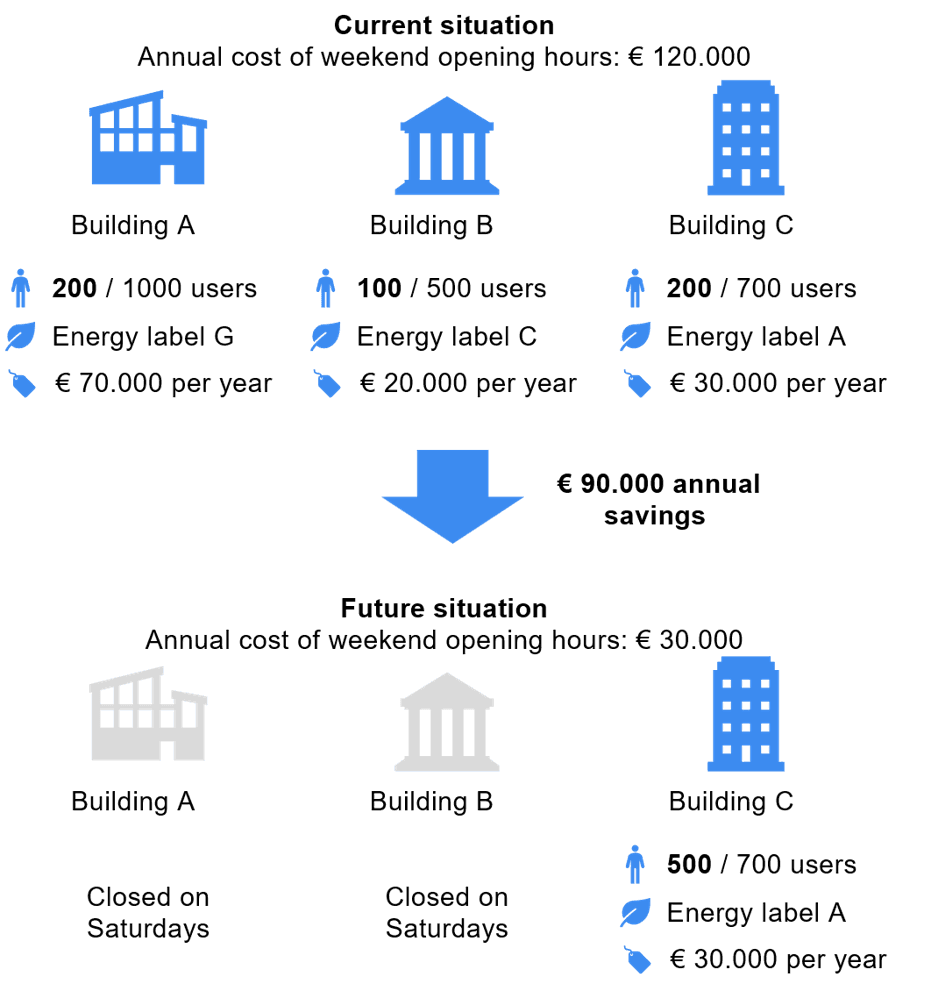
Meerdere instellingen zijn met deze businesscase al begonnen met het verzamelen van real-time data. Sommige hebben de kostenbesparingen uit deze case zelfs gebruikt om hun volgende project te financieren. En omdat deze kostenbesparingen jaarlijks zijn, biedt dit hen de mogelijkheid om snel op te schalen!
Ben jij benieuwd hoe deze businesscase eruitziet, of wil je dat wij je helpen om te bepalen hoe het er voor jou uit zou zien? Neem dan nu contact met ons op via info@pleqcampus.nl!


